Category Archives: Market Strategy

Alexa, What’s My Marketing Strategy For Voice?

Image result for voice activated[As appeared in Media Post’s Marketing Insider]

The architect Louis Sullivan coined the maxim that “form follows function.” In the case of marketing channels, you could reverse that to say function follows form. How you use an axe differs from how you use a shovel because of what the form allows you to do. Similarly, the best use of a billboard is different from the best use of a banner ad because of what the form allows you to do. In order for brands to find success with voice, they have to consider the strengths and constraints of the form.

It may disappoint some marketers to learn that “receive promotions and special offers” is not a popular use case for people interacting with voice-enabled tech. In fact, according to Nielsen’s “Total Audience Report: Q1 2019,” top responses for how smart speaker owners use their devices include searching for real-time information, getting the latest news, making calls and sending messages. If you observe how most people interact with voice channels, it’s initiated as a request or command. This form leads away from using voice for marketing-as-promotion and toward marketing-as-a-service. It’s a medium better built for informing, supporting and responding rather than advertising. With that strategic perspective, brand leaders should look past their advertising teams for inspiration and instead tap into the insights gleaned from service-centric programs like customer service and customer loyalty groups. 

Tapping into the service aspects of marketing will suggest the most likely opportunities to shape positive experiences via voice. There’s a lot of information there that can point to effective brand applications for voice. For example:

  • Does my product/service require set-up?  Can voice instructions walk customers through it?
  • What are my most frequent complaints/issues?  Can voice provide an easier way to resolve them?
  • How, where and when are people using the product/service?  Does that context suggest ways voice could enhance/extend those use situations?

Once you find where voice can add value, it’s imperative that customers know what’s available to them. Brands can enable access to voice-enabled devices through existing communication methods. Product packaging, owner’s manuals, brand apps, and welcome emails are all channels through which companies can promote that they are “voice-friendly.” If done effectively, it should be apparent to consumers where to go and what to say to take advantage of a brand’s voice features.

The new reality is that brand-driven monologues are quickly being replaced by customer-initiated dialogues. Voice can best drive brand value by expanding ways to serve and enhance the customer experience. Those who try to shoehorn this technology into an existing promotional strategy might find silence on the other end.

Leave a comment

Filed under Artificial Intelligence, Channel Strategy, Digital Marketing, Market Strategy, media

The Biggest Agency Gap? Surprise, It’s Not Digital

(This article was originally published in HuffPost and AW360)

The refrain for digital transformation is as necessary as it is clichéd. For all the talk of our digital present and future, marketers still have a lot of road to travel to move from systems developed to deliver broad-based campaigns to systems built to deliver millions of individual communications in real-time.

But there’s an even larger gap than that to fill for marketers, and particularly for the agencies that serve them. That’s the gap between marketing and marketing communications. Agencies tend to conflate the two to the extent that they don’t know the difference. But marketing is far more than messaging. The traditional 4P’s of Marketing have been updated with more letters since they were coined in the 1960s, but even the original version has 3 more Ps than Promotion.

As agencies build their data capabilities, they almost exclusively focus on how to better deliver messaging. That includes better targeting of the message, more effective media channel selections, and more compelling message content. But that data should be applied to more than messaging. It should be informing pricing decisions. It should uncover shopping preferences. It should indicate product opportunities or shortcomings. The data is there to inform those decisions, but the framework is not.

It’s not surprising of course, because that’s not where agencies are used to playing. Pricing, distribution and product development aren’t part of their historical job description. The Cannes and One Show award categories have expanded to embrace all kinds of new media forms, but I don’t recall anyone being celebrated for best dynamic pricing implementation.

Agencies need to provide this more holistic marketing perspective to their clients. The barrage of studies related to shorter CMO tenure indicate that their clients are too often seen as lacking the internal credibility to impact the foundational business of the company. Agencies reinforce this CMO shortcoming by pushing to add experts or tools focused on improved messaging. Agencies could be a far greater asset to their senior clients by tying these resources to other critical parts of the full marketing mix. A true Marketing partner looks at questions differently than a Communications partner. For example,


Marketing is more than communications, and agencies should be about more than messaging.

#AgencyVoices

Photo © iStock, taken from original post


Leave a comment

Filed under Innovation, Market Strategy

The Fall of the Titans: Why GAFA is Not Here to Stay

Article originally appeared in Advertising Week

Fall of the TitansIt’s beyond ironic that the companies most celebrated for dethroning the former titans of business are now themselves considered indestructible. There’s a belief that GAFA (Google, Amazon, Facebook, Apple) are now so dominant, that they’ll never be unseated.  It’s hard to picture a world where they’re not dominant, but it was once hard to picture the same of AT&T, GM, IBM and Microsoft. The tides that swept GAFA into their positions of leadership have not ebbed. There are several scenarios and trends that could erode what seems like their unassailable position.

New Technologies

The Silicon Valley credo is Disruption, so why should any of its denizens be exempt? As Clayton Christensen famously explained, established companies don’t get disrupted because they’re stupid, near-sighted and unimaginative. They get disrupted because the business demands of a successful established company don’t permit them “to focus resources on proposals that customers reject, that offer lower profit, that underperform existing technologies and can only be sold in insignificant markets.” GAFA is clearly now among the established ranks, and there are several technologies that offer the potential to disrupt them:

Ad Blocking

People are increasingly rebelling against the interruptive nature of online advertising. If a significant amount of the population employs the means to opt out of advertising, that undermines a cornerstone of the Google and Facebook business model. The initial scare seems to have abated for now, but the storm has far from passed. In the nuisance scenario, it’s easy to see an escalating arms race of blocking and anti-blocking technology. At the more severe scenario, ad blocking could significantly reduce the eyeballs that are critical to their financial models.

AI

While the GAFA are all racing to embrace AI, at least part of that embrace is driven by fear. The shopping feature of Alexa is naturally tied to Amazon, but that same technology can be applied to direct you to whoever had the best price, was the closest for pick up, and who most aligned with your social values. AI has the potential to bypass the aggregator function played by Amazon in commerce, Google in Search, and Facebook in social content. For example, I could ask my personal assistant “what are my friends up to?” and it could scan their social feeds, blog posts, and give me a synopsis. I wouldn’t have to go to central site, nor would I care where it came from. Facebook could block access, but one you start battling human behavior instead of feeding it, the gig is up. Apple is even more susceptible to being depositioned by AI. Amazon, Google and Facebook all have vast sources of native data that could drive proprietary AI applications. Apple has far less. What has made them champions for some privacy advocates makes them especially vulnerable in a data-driven world.

The Immersion

In the long-term, a loose connected thread in the growth of AI, blockchains, IoT, and the Cloud Is the expansion and de-centralization of computing activity. As the ubiquity of computing grows, everything becomes a computer – clothes, appliances, cars, even body parts. The shift from desktop to mobile led to the rise and fall of many companies. What happens when the world shifts from mobile to…everything? When everything is a computer, nothing is. That is, when we’re immersed in an ever-present layer of computing, there is no single thing, database or place that channels our interaction with cyberspace. This would lead to new behaviors that eschew having a few personal objects for connecting (Apple), a preferred source for searching (Google), a primary marketplace for buying (Amazon), and a common arena for interacting (Facebook).

Financial Pressure

While none of these companies are hurting for cash flow, each has potential financial vulnerabilities. Apple, Google and Facebook share a dependence on a fairly specific revenue source. Gary Bourgeault does a nice analysis of this dilemma. The most dependent is Apple, who’s current growth is almost entirely tied to the iPhone. Most companies dream about a similar asset, but it’s deep and narrow. The Apple watch has seen steady but slow growth, many of its services have ceded prominence to other competitors (e.g., Apple Music to Spotify), and they’re late to the AI assistant world. So as new sources of penetration dry up for iPhones, Apple requires another huge hit that’s not clearly lurking in their current portfolio.

For all its range of wonderful products, Google is subsidized almost entirely by its search and display advertising revenue. While the Search business made the deft switch from desktop to mobile, the broader vulnerability of the business model remains. As discussed above, AI has the potential to disrupt the Search model. Facebook made a more impressive switch to mobile which preserved their business model and their growth. They’ve also been quick to identify future competitors and co-opt or acquire them. For all that foresight, their business model still depends mostly on the interruptive ad model of traditional media – forcing people to see ads on their way to what they really want to see. While their targeting provides the promise of more relevant commercial messages, the same behavioral and cultural changes that threaten the efficacy of the traditional ad model threaten Facebook as well.

Amazon doesn’t suffer from a narrow revenue source. Amazon has grown an impressively diverse revenue base, but it’s been involved in a confidence game for its entire existence. The company has consistently been valued on how it’s positioned itself for the long term. That’s made it an aggressive pioneer in logistics, cloud services, and AI to name just an impressive few. But Amazon has been valued on their future payoff for over 20 years. At what point will investors want to see the pot of gold at the end of the rainbow? It seems investors continue to be satisfied as long as they see revenue growth. And it may be that when revenues start to level out, it’ll be able to turn on the earnings lever. But it seems equally likely that it will find itself living in the low-margin world it created and forced to compete among the mortals whose valuations are based on measurable profit growth.

Regulatory Action

Google’s recent EU fine wakes a dormant vulnerability for all of GAFA. At some point, governments may decide each of them has just grown too big. Historical cases against IBM and Microsoft showed the halting effect of government litigation even without a technical legal victory. IBM and Microsoft were hamstrung by the drawn-out multi-year anti-trust litigation that forced them to pull back on their most aggressive initiatives while the action was ongoing to avoid providing additional fodder for the regulators case.

New privacy rules would also significantly affect all their business models, though those of Apple to a lesser extent. The US has allowed a relatively free rein, but actions in the rest of the world point to stricter requirements on how personal data is collected, stored and used. If that data became less available or costlier to use, that would significantly affect the existing business models which generally rely on the free use of personal data. Google and Facebook are especially dependent on ad revenue that’s tied to their targeting ability. If that targeting is hampered by privacy regulations, their inventory could become less attractive or more expensive.

Still other regulatory pressures are surfacing in the increased scrutiny of Facebook and other social media companies. Their long-standing argument that they should be treated as aggregators rather than publishers is losing sway as negative publicity piles up around online bullying, hate speech and fake news. A new law in Germany requires all social media companies to remove illegal content within 24 hours of notification. The cost of compliance would be felt in various ways, from operations to partnerships.

The legal threats in all these areas are closely tied to the political, and that does not bode well for the current titans. Changes in regulations follow changes in popular sentiment, and that is shifting as the former Davids have become the new Goliaths. Marketers dislike the duopoly of Google and Facebook who together represent 60% of US digital spend. When Facebook was found to have misreported engagement times on video ads, they essentially shrugged it off. Marketers have little of the leverage they’re used to having over media owners. Similarly, Amazon is now seen as a competitor to most every retailer. The popular culture that used to celebrate these companies as champions of the people are now as likely to paint them as stiflers of innovation and corporate bullies. So there is a steady accumulation of parties actively rooting against them.

It’s difficult to predict a single factor that would prove their Achilles heel. Yet the GAFA gang would have to defy economic history to maintain their current market position. That’s not to say they’ll go away. Many of their predecessors remain as successful businesses despite no longer being the undisputed dominator of their industries. That continued success is even more likely when you consider how brilliant current leadership has proved in anticipating new opportunities and threats. But to continue in their current positions would require an unprecedented combination of reduced level competition, a slower pace of technological innovation, and relaxed government intervention. None of this is likely.


Leave a comment

Filed under Digital Marketing, Market Strategy, trends

Has Marketing Truly Changed?

Retro-Telephone-And-Charger-For-Smartphone-Amazon-460x3842014 has brought the usual proclamations of  trends and predictions for marketers in the year ahead. Most of them take the tack of asserting how the world will be transformed and marketing forever changed.  There are, of course, the contrarians who dismiss everything as hype, asserting that the only thing that has changed is the buzzwords.

As always, there is truth in both views when viewed in the proper context. Here is a short list of what isn’t changing and what has changed for marketers across every industry.

WHAT ISN’T CHANGING

1. The Importance of Emotional Connections

The best brands foster an emotional connection with people that transcends product attributes. We are emotional animals in the end, and we want to feel an attachment with the things we use and own. It does not matter how quickly a brand adopts the latest social network if it doesn’t have a reason people want to connect.

2. The Discipline of Strategic Brand Behavior

People want their brands to stay in character. The tactics can be wide-ranging and innovative as long as they are rooted in what people come to the brand for in the first place. I don’t want my sportscar fantasy interrupted by a message of responsibility and I don’t want my warm family moment put off by a sexy flirtation. Regardless of the venue, a brand still needs to be rooted in a strategic reason for being.

3. The Quest for Differentiation

No matter what media we pursue, the marketing environment is characterized by clutter. The noise of life  creates the constant challenge to find ways to meaningfully stand out not just from competitors but from the hum we’ve taught ourselves to ignore.

WHAT HAS CHANGED

1. Consumer Expectations

We expect far more interaction with the companies we transact with. We expect them to respond in individualized ways . We expect to them to be where we are instead of searching out where they are. We bring an attitude to all our brand interactions that we used to only  bring  to our calls to customer service.

2. Performance Expectations

The rise of addressable media has increased the emphasis on measurement. Quarterly awareness tracking is increasingly inadequate for both marketers and the people they’re accountable too. Understanding and weighing the contribution of the marketing mix will continue to get more sophisticated and rigorous.

3. Expanding Toolsets

The explosion of channels has created a nearly infinite toolset for marketers. This will only continue. The idea of 360 marketing will be rendered increasingly irrelevant for its sheer impossibility. Marketers will need to strategically identify the tools and channels that make the most sense for them and their customers.

4. The Demands of Me.Here. Now

The world will keep speeding up on every level. On the cultural level, brands wanting to tap into social trends will require the means to respond in days not weeks. On the individual level, we’ll grow increasingly impatient with companies that don’t respond to us immediately. The continued rise of mobile technology will march hand-in-hand with a rising demand to engage when and where we want.

In short, the principles of brand marketing remain intact. The value of clear brand vision and a rich customer understanding is eternal. But the application of those principles demands a new mode of action that is rooted less in an architectural mindset (plan, design, build) and more in a software development mindset (build, learn, rebuild).

Leave a comment

Filed under 21st Century Marketing, Innovation, Market Strategy, Mobile, Uncategorized

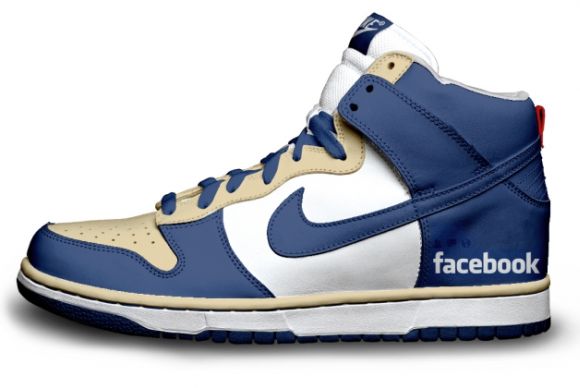
Is Facebook the Nike of Social Media?

All the discussions about Facebook’s IPO center on how a company that already dominates the social mediasphere can continue to dramatically grow even more in the future.  The valuation it’s seeking is justified if you believe that what Facebook is now represents a fraction of what it will become.

There is an interesting parallel here to the US athletic shoe industry of a few decades ago. Historically, that industry had a rotating position at #1.  Leadership was determined by external trends largely outside of the control of the companies.  As changes in tastes, fashion, and fitness changed, so did companies’ fortunes.  When basketball shoes were only for basketball players, Converse dominated. When they became a fashion statement, Converse faded. When running was the fitness movement sweeping the nation, Nike came to the fore.  When running gave way to aerobics, Reebok was born. Because of that, up until the 1980’s, no company that lost the #1 position ever regained it. In this way, the industry was similar to the social media world. As Friendster gave way to MySpace, which gave way to Facebook, no company ever regained its position after the crowd had moved on to the next thing. They were each the beneficiary and the victim of changing tastes and trends.

In 1983, Nike slipped. They missed some trends, had overextended their product lines, and dropped from the leadership position. Phil Knight came back as CEO and pivoted the company. Over the course of a year and a half, they changed the leadership team, cut costs, streamlined existing products, established new ones, and changed their marketing strategy. Progress was erratic, but by the 1990’s, they had regained the lead spot. For the first time, a company had strategically engineered a return to leadership in that category.

So the question is whether Facebook is a Nike. Can they engineer success in a way that defies the way the industry has behaved until now?

Leave a comment

Filed under Innovation, Market Strategy

Planning is Everything. Plans are Nothing.

The title above is from a quote usually ascribed to Dwight Eisenhower.  Though he was referring to battle plans, it is an apt lesson for business plans as well. His point was that the battle never goes as planned. Weather conditions, enemy reactions and human mistakes conspire to ensure that every military action usually goes off plan before the first shot is fired.  But if the planning process is done with the proper rigor, leaders can react more effectively to unexpected developments. They can assess how changes impact their overall strategy, and better judge the consequences of their subsequent decisions.

I recalled this quote after seeing an interesting discussion on LinkedIn debating the value of business plans for new companies.  Some potential entrepreneurs were dismissing the value of business plans for start-ups because they rarely had any relevance to the business once they hit the  realities of actually going to market. General Eisenhower reminds us how this argument misses the point. The value of a business or marketing plan is not in the plan itself, but in forcing you to think in a rigorous way about how best to deploy your resources. Who is your target? What’s your value to them? Who’s your competition? What kind of human and financial resources will you need to make a go of it? Of course, unless you are the first true psychic, most of what you come up with will be wrong.  The details of the plan may be mere historical artifacts within months of launch. But if you planned well, you are better able to identify and react to what you were wrong about.

The same lesson was delivered in another context by an accomplished climber I once heard speak. He described the meticulous planning process that his team followed before a major climb. They literally mapped out every step. He went on to say that they almost never followed the predetermined path once the actual climbing began, but it was the planning that allowed them to make intelligent choices under stress about what they could afford to change.

Whether you are crafting a business plan for a new company or a marketing plan for an established brand, there are three important lessons in this.  One is that a plan is worth what you put into it.  If you just go through the motions in order to be able to point to an official-looking plan, it will be of no value. Second, you shouldn’t dismiss the planning process just because the plans themselves are rarely executed.  A well-constructed plan will make you a smarter leader and manager for the unexpected turns that inevitably come your way. The final related lesson is that you should not treat the plan as anything but your best current guess. If the plan isn’t working, don’t be afraid to change it. Too many marketing managers disregard new information and new opportunities because it’s “not in the plan.” A plan is not a substitute for thinking. Plans should be treated more like boyfriends than husbands. You should always be open to a better one.

Leave a comment

Filed under Activation, Business Management, Market Strategy

Business Culture: Family vs. Team

I often encounter business leaders who try to capture the positive aspects of their company culture by referring to their “family” environment.  These are often managers who want to distinguish themselves from a cutthroat or unethical work environment.  Nonetheless, whenever I hear an executive  refer to the company family, I can’t help but wince. Inevitably, they are undermining their own credibility, integrity, and success.

While I appreciate the sentiment, companies cannot operate like families. At their best, they are teams. Managers often confuse the analogies of family and team, because many of their positive values overlap.  They both require sacrifice for the good of the group, and being able to rely on that same sacrifice from others.  They both thrive in a spirit of tolerance, where we acknowledge each other’s different styles and strengths. Both strong families and strong teams share common core values, such as trust, honesty, and loyalty.

But they diverge in a meaningful way. Family is an unconditional commitment. A  family should remain a family no matter what they do.  A family does not have an explicit mission, other than its own survival. A team is a conditional commitment. It exists because of a mutual commitment of its members to support an explicit mission, be it completing a project, defeating a competitor, or providing a service.  This creates different expectations and different obligations on its members.

A family leader is expected to support his family in every way possible. If a child is engaging in behavior that is destructive or embarrassing to the family, the parents’ first obligation is to support that child, and do everything they can to overcome whatever is at the root of their child’s  problem. If an employee is engaging in behavior that is destructive or embarrassing to the firm, a manager’s obligation is to minimize the negative  effect on the mission. If that can be accomplished by helping the employee, all the better. But if it can only be addressed by replacing the employee, that’s an acceptable alternative.

If a family member’s temperament is a poor fit with the rest of the family, the unconditional commitment of the family should overlook those differences, and accept them as they are. If an employee’s work style is at odds with the rest of the company, and manager needs to either work with that employee or find a replacement that will make a better fit.  A manager who accepts people as they are to the detriment of the firm is incompetent.

There was a sad story about a family that adopted a child, and then sent the child back after they found out he was going to be challenging to take care of. The universal reaction was that it was unethical to reject a child from the family simply because he was too hard to take care of. In a business situation, the ethics are practically reversed. If an employee was taking up disproportionate resources to support and manage, other employees would consider it unfair. One of the most common worker complaints is management that tolerates dead wood employees who don’t pull their weight at work.

Sports are the most obvious examples of team. If a wide receiver on a football team can’t catch a football, a coach would not keep him on the team. But you would never think of replacing a sibling for lack of performance.  A football team doesn’t pay its starting quarterback the same salary as its backup kicker. A team rightfully gives more attention to the people who are most critical to its success. A family’s love and attention should not be doled out on the basis of some performance measures. With a family, the family unit itself is paramount. With a team, the mission of the team is paramount.

Managers who promote their teams as families do themselves and their employees a disservice.  As in the recent downturn, it can cause additional bitterness when it requires letting people go. It makes a lie out of everything the manager claimed to stand for. Families don’t disown other family members in bad times. The same disillusionment happens if someone is passed over for a promotion or gets a smaller bonus.

Employees lose trust in their leaders if they see them violating the principles they espouse. The differences between family and team are subtle but profound, and managers who confuse them risk being seen as hypocritical or dishonest when those values are put to the test.

Leave a comment

Filed under Business Management, Market Strategy

Getting It: Chevrolet and Volkswagen

The contrast in behavior between two car companies over the past several  months could hardly be more illuminating.  As reported by DetroitNews.com, the marketing heads of GM directed their internal staff to stop referring to cars using the Chevy nickname and instead use the more proper Chevrolet label.   It smacks of  a guy I knew named “Ox” who tried to convert everyone to calling him Alex after he graduated college and got his first job in banking.  He thought it was more fitting to help him climb the corporate ladder.  It distanced him from his old friends and made him less interesting to his new ones. After all, who would you rather have watching over your money, Alex or the Ox?  GM’s attempt to backtrack a couple days later was only slightly less baffling.  They explained that because they sell more cars internationally now than domestically, they thought it better for consumers outside the U.S. to learn their proper name first before learning the nickname.  That defies the way nicknames really work with both people and products,  if Paul David Hewson (Bono)  and Coca-Cola (Coke) are any indication.

Compare that approach to Volkswagen.  They’ve embraced the Punch Dub game that kids started around spotting a Volkswagen.  When I saw their ads shortly after my kids starting punching each other in the arm every time they saw a VW drive by, it was both endearing and smart.  It made those familiar with the game feel like insiders, and those unfamiliar with it curious. Every marketer strives to integrate their brands into the popular culture, and they handled the opportunity deftly.

The contrast comes down to a simple definition of a brand. While marketers work hard to foster brands, a true brand is ultimately owned by the consumers. It is people’s perceptions and feelings that define a brand. VW took what people were doing around the brand and embraced it, GM pushed it away. Maybe GM took their part in popular culture for granted because Chevy has been around so long.  It might have been easier for VW to see the relatively new phenomenon as a gift in a way that GM could not. Still, the fundamental mistake was in a mindset that misunderstood the fundamental nature of brands.

Leave a comment

Filed under 21st Century Marketing, Branding, Cases, Market Strategy

How Markets Create the Need for Tea Parties

As the anti-incumbent story rumbles  across the mediascape, there is a familiar theme — call it the “I’m mad as hell and I’m not going to take it anymore” movement. Congress is at its lowest approval ratings of all time, political distrust is at an all-time high, and new activist fervor is sweeping the land. Politics as we know it is about to change.

Don’t believe the hype.  Whether it’s the Know Nothings of the 1840’s, the Term Limit supporters of the 1990’s,  or today’s Tea Party, they are all a response to the fundamental structure of the American political market.

I worked on political campaigns, and it is important to learn that there is a fundamental difference between the political marketplace and the consumer marketplace.  Both are ruthlessly competitive, so it is not a difference in ethics or morality. It has to do with what I call “category effects.”  Consumer markets have them, and political markets don’t.  Here’s why.

In simple game theory terms, there are four general outcomes between two competitors in the consumer marketplace:

  • Both gain
  • Both lose
  • Competitor 1 gains, Competitor 2 loses
  • Competitor 1 loses, Competitor 2 gains

For an example where both gain, look at Adidas and Nike. Both doing well financially, both well-regarded major brands, and benefiting to a large extent from the fact that they have a major competitor helping them drive the market and mythology of athletes and athletic gear.

For an example where both lose, look at United and American Airlines. Even before the recession, the two largest US carriers were losing share to Southwest-like competitors on the discount end and Virgin on the high-end. Neither gained from the struggles of the other, and both added to each other’s  problems by pricing and service policies that soured people on the airline travel experience.

In both situations, individual players face consequences for how the whole category performs.  If companies compete in such a way that the category grows, they may both win.  If they compete in a way that the category suffers, they may both lose. It is in their self-interest to have people think well of the category.

By contrast, political competition has only two outcomes:

  • Competitor 1 gains, Competitor 2 loses
  • Competitor 1 loses, Competitor 2 gains

In a campaign, it does not matter if you have two great candidates or two terrible candidates, one person gets elected.  There is no outcome where both gain or both lose.  There are 100 Senators in the US Congress, and short of a change to the Constitution or an overthrow of the US government, that number is not going to change based on people’s approval ratings.   In other words, there are no category effects for politicians. If doesn’t matter if people love or hate the category, 50 people still win the same prize either way. There is no self-interest for politicians to make people feel better about the category.

That is why negative advertising is frowned upon in the consumer marketplace, and embraced in the political marketplace.  In politics, if people hate the category I’m in, I can still win as long as they dislike my opponent more than me.  It doesn’t matter if the population is so put off that only 3 people even bother to vote. If two of them vote for me, I win.   In the supermarket, if people hate the my category, it does not help if they hate me less.  I still lose. If two people buy my product  and only one buys my competitor’s, we both go out of business.

As long as there are no category effects in politics, there is no incentive within the system for the candidates to improve the institution.  Efforts like the Tea Party represent an external effort from outside the system,  attempting to impose category effects on a market that inherently lacks them.  If patterns are true to form, one of the political parties will absorb their key tenets into their platforms, and the system will continue to chug along as it always has.

1 Comment

Filed under 21st Century Marketing, Branding, Market Strategy, Uncategorized