Real-Time Marketing Takes Real Character

Open 24 HoursReal-time Marketing is a catch phrase of the moment. There are arguments as to what it means and how far it will go, but no one can argue with these basic premises:

  • Response times are shrinking for marketers who want to play in the currents of popular culture. The velocity of change in everything from bestseller lists to tourist destinations has accelerated the cycle from up-and-comer to has-been. Marketers have to act more quickly, frequently, and astutely to earn cultural relevance.
  • People expect brands to respond to them in multiple forums of their choosing. Today’s marketers can look with jealously at the ancient world where customer interactions were handled primarily in-store or through 800 numbers. People now assume that companies will respond to them wherever they happen to be – In-store, Facebook, Twitter, website, etc
  • People tap into a wider spectrum of company behaviors in forming their brand perceptions. While advertising still commands considerable power, people are increasingly influenced by a broader range of company activities. Apple suppliers’ working conditions, Chick-A-Fils political views, and Zappo’s sales agents have exhibited powerful affects on their brands.

These trends affect the most primary foundations of successful brand building. More specifically, they shed a new perspective on the concept of brand storytelling.  Any student of marketing knows that great brands are built on great stories. Stories are the means by which we understand, remember, and connect with things that are important to us. When we recall great people or great events, we do so with stories. It’s why American Idol and its variants don’t use their airtime to merely judge the talent. What draws viewers in are the stories they construct about what got them there (the obstacles they overcame, the people who inspired them, the dreams they’re chasing) and the stories that unfold as they progress through the natural drama provided by the multiple rounds of competition.

Traditional advertising rightly celebrates well-crafted stories. From Mean Joe Green and the kid with a Coke to Nike’s Jogger.  successful brands have harnessed stories to conjure the highest level of connection with their audience. Yet these tight, well-contained, highly produced stories don’t mesh easily with the trends we just described. How do you craft stories in the world of tweets, snapchats and user-generated content?

The answer is that today’s brand stories must rely more on characters than on plot. Stories that rely on plots don’t have the malleability to meet the emerging forms of marketing.  One can think of a movie like The Sixth Sense, composed with precision to deliver a steady dose of suspense that ends in a wonderful collision of surprise and inevitability. Compare that to a James Bond movie. Outside of a few twists, we already know how it is going to turn out in the end. Yet we embrace the ride in order to revel in experiencing the character we love. That is the advantage of character-based stories. They lend themselves to endless sequels.  No one is pressing for Sixth Sense II but the James Bond franchise keeps churning on.  Characters allow the stories to pour out in endless variation. They inspire Fan Fiction and fierce loyalties.  The common quality in people’s passionate embrace of Star Trek, Sex in the City, House of Cards, and similar properties is not in the plots, but in the characters.

This is not the “brand character” often listed on a standard marketing brief. Those usually list a short collection of well-worn adjectives. Character needs to be richer than that. We feel genuine attachment for entirely opposite types:  because they are the same as us, because they are different from us, because of their glamour, because of their humanity, because of their goodness, because of their badness.  We are drawn less by type than by depth. A real character is the fuller expression of the drives, instincts and world view that shape how you act in the world.  We want to be in the company of that kind of character, to interact with it, even to add to it. With this character firmly in place, a brand can more easily weave stories across channels, and let people tell stories on its behalf. This is the character that brands require to prosper in today’s real-time marketing environment.

(This topic was inspired by a discussion with Mark Figliulo on the nature of character in stories).

Leave a comment

Filed under 21st Century Marketing, Digital Marketing, Innovation

Complexity is the New Clutter for CMOs

ImageTen years ago, the most pressing challenge facing CMOs was how to break through the clutter of mass advertising. So they partnered with agencies who developed a reputation for getting noticed in the noise. The Burger King work developed with Crispin Porter epitomized this world. Many found the plasticized King off-putting, but it definitely got noticed. In a world of advertising overload, that was no small feat.

The need to connect emotionally with people will always be fundamental to brand building, but clutter is no longer the CMO’s chief adversary. Today’s market is ruled more by complexity than clutter. Marketers face consumer expectations that are increasing exponentially. We now insist that companies respond instantly to us in the channels of our choosing. We don’t call or email their service department; we put a hashtag in front of their name and expect a prompt response.  We want sales and service to move easily between offline and online worlds.  At the same time, the means to meet these expectations are expanding. Established players like Twitter, Google and Facebook are introducing new features weekly, and players with new models arrive by the dozens every month. The infrastructure needed to support the effective use of these avenues That’s why Gartner predicted that CMOs would be spending more on IT than CIOs by 2017. 

Yet amid this exponential expansion, marketing budgets only increase linearly, if they increase at all. It’s little wonder that many CMOs feel they’re losing ground. Accenture reported earlier this year that the overall feeling among CMOs is that they are less prepared to compete in today’s marketplace than they were a year ago . About 4 in 10 CMOS said they lack the tools, people, and resources to meet their objectives. You know it’s tough going when you feel you’re moving backwards.

As a result, CMOs are looking for a new set of partners to help them manage a fundamental difference with the Complexity Challenge. Overcoming clutter meant figuring out how to use the same tools everybody else was using more creatively. Overcoming complexity means figuring out which tools to use and how to use them. This requires not just creative insight, but business, technical and channel insight. Today’s CMO needs partners who can:

  • Sort through the flood of new offerings to constantly update the right strategic portfolio of tools that will deliver the most impact
  • Orchestrate the use of those tools so they inform and reinforce each other
  • Harness the value of advanced analytics to generate the right feedback on where and how to win more hearts, minds, and business from the people who matter most to the business

Leave a comment

Filed under Uncategorized

Meet the New Boss, Same as the Old Boss

iPad and 50s TVThe Digital NewFronts have exploded over the past two years. What used to be a 2-day affair among digital specialists has become a weeklong extravaganza for a mainstream marketing audience. AOL, Google, Hulu, Yahoo and others hosted events worthy of the television upfronts featuring celebrities, deal announcements, and dramatic unveilings of coming attractions.

The YouTube Brandcast event was one of the marquee gatherings of the week. Complete with performances by Snoop Lion and Macklemore, the 2-hour presentation conceded nothing to the star-studded fests of the television networks. Interestingly, that was not the only nod to the television titans. The essence of the entire sales pitch was in terms any TV buyer would understand. The selling point repeated by every presenter was the huge number of impressions that YouTube is now generating.  There was some passing reference to the long tail appeal of their wide offering, but the main thrust was all about eyeballs. Numbers in the billions were flashed again and again. The production values of the featured channels were lauded for the television-like quality. Over in the AOL meeting, a partnership with Nielsen Online Ratings was announced that would measure reach and frequency for their library of premium videos. So buyers could look at GRPs both offline and online.

The advertisers in attendance were encouraged to tap into this vast viewership with sponsorships and pre-rolls. In other words, they were selling adjacencies to their content just like TV. There was little talk of special engagement opportunities or unique connections available through digital. The message was about content generating massive impressions and running ads next to their content. Like the Goths invading Rome, it turns out their objective was not to destroy the empire, it was to supplant the Emperor.  Traditional television networks may be losing, but traditional television business models are winning.

Leave a comment

Filed under 21st Century Marketing

From Mobile First to Moment First

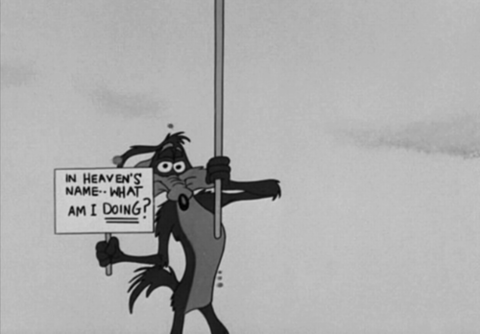
Wile E. Coyote in heaven's name what am I doingMobile First is the mantra currently dominating the design and development community, including mine. The truth is that the Mobile First is a much better guess about what I want, but it is still a guess. Assumptions about what Mobile means are increasingly cloudy. As smartphones and tablets come to dominate the device landscape, their usage is expanding beyond the simple “on the go” assumption typically associated with mobile.

People are increasingly using these devices as substitutes for the PC. Recent statistics suggest that over 80% of tablet usage occurs at home.  Another study estimates that 68% percent of smartphone usage is at home. Based on these figures, it is perhaps unsurprising that 1 out of 3 users prefer to use the full site on their mobile devices when given a choice. So it is increasingly hard to characterize mobile device usage as an “on the go” experience. To assume it is more time-constrained and transaction-oriented will become less true as these devices continue to replace PCs as the primary Internet device.

The real goal for developers should be to work towards Moment First design. The principles surrounding Adaptive Design and the Contextual Web point to the next challenge in experience design. Being in the moment requires making better use of the multiple hints we can gather about how people are engaged when they look for content. It will take into account more than the device, but also the location, time, behavior patterns and other situational clues that can gear the content to the best perceived need for that moment. Building a Moment First architecture will continue a pattern in which the technical development for content delivery becomes increasingly more complicated so that the experience itself can be simpler and more intuitive. This provides an opportunity for toolmakers and experience designers to find ways to harness that complexity in new development models.

Leave a comment

Filed under 21st Century Marketing, Innovation, Mobile

Is this the New Apple?

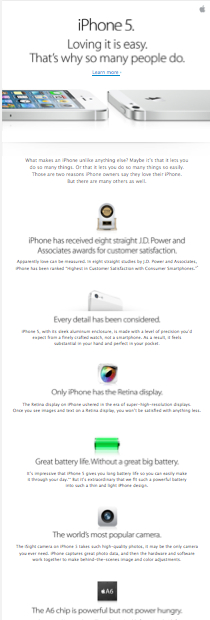
Apple eMailI recently received this promotional email from Apple for the iPhone 5. It brought to mind some of the recent chatter about Apple’s legacy and future. I’ve tended to dismiss the talk from naysayers who’ve said the Apple reign appears over. This pronouncement has been made many times over many years, and their culture, values, and willingness to take risks has consistently brought them back from the inevitable setbacks.

But this email gave me pause. Its content and tone made me think there may be a turning point afoot after all. I couldn’t recall seeing something from Apple that was working so hard to sell. Obviously, few companies have mastered the art of selling better than Apple, but the best of their work did it in a way that was less about selling and more about enticing you to buy. It wasn’t going after you as much as it was inviting you to come to them. This email has none of that flirtatious quality. It is selling and selling hard.

It lists multiple features, and the word “lists” is intentional. Feature after feature scrolls by like a spec sheet. The Apple way had been to romance a particular feature to give you a sense of what wonder lay in store for the lucky user. No such alluring Fan Dance here. Every distinguishing feature is laid out with nothing left to the imagination. Yet the most telling indicator to me is the headline – “Loving it is easy. That’s why so many people do.” I’ve never seen Apple proclaim it’s popularity. Even as it came to dominate the smartphone market, it always carried the sense of being a club for the discerning person who appreciated design and creativity. This line brings them a step closer to the car companies and other  product makers who revel in claims about “best-selling” and “most popular.” Forget the club, bring on the bandwagon. I tempered my initial reaction to this shift in tone by arguing that it may be a by-product of the email channel. Maybe they gave themselves permission to go a little bit more hardsell in a direct response oriented channel. But the iPhone website has the same line so it seems it’s the basis of a broader campaign, not just email copy. If so, this signifies a different approach than we are used to experiencing from Apple, and makes the talk of a turning point for Apple a lot more credible.

1 Comment

Filed under 21st Century Marketing, Branding, Mobile

Mobile: Moments that Matter

The rise in mobile communications signals a change in marketing that is more significant than a shift in channels. It represents a profound reconsideration in how to think about effective targeting. The principles that drive the prevailing wisdom on targeting are based on the historical move from mass advertising to direct marketing. Mass advertising provided a low CPM, but for most marketers it involved a good deal of waste. With TV, radio and print, in order to capture the people you really wanted, you had to expose your message to a larger audience of people you didn’t want. You could reduce that somewhat by seeking out narrower audiences in niche programs or titles, but it was still casting a wide net.

The promise of direct marketing was that you could deliver your communications only to the people you really wanted to reach. If you wanted affluent Moms in households with kids under 12, that’s all you had to buy. The higher CPMs that came with this approach were justified by the efficiency and higher response rates. There was a shift from seeking out as many people as possible to seeking out only the people that mattered. It was a shift from focusing on “Places that Matter” to “People That Matter.”

The arrival of digital performance marketing took the principle of “People that Matter” to an even higher degree of precision. You could go beyond demographics and customer data in targeting, and include even finer distinctions revealed by online behavior. Now you could target Moms in affluent households with kids under 12, who seek out photography tips, love Gwen Stefani videos, and visited your website two days ago. At first, Mobile seemed like an opportunity to take that specificity even further. But as the nature of mobile usage evolved, it turns out a difference in degree became a difference in kind.

Mobile shifts targeting from a focus on “People that Matter” to a focus on “Moments that Matter.” Digital media maven Dave Marsey coined that phrase to signal the new challenges and opportunities Mobile provides beyond more precise targeting of individuals. Both the explicit and implicit data around Mobile allows marketers to market to the situation rather than just a person. For many brands, the moment is more important than the person. If you are in the QSR business, for example, would you rather connect with someone in the heart of your demographic target, or with someone stepping out of work for lunch at 11:50am within a walking distance of one of your restaurants? The first choice is a person that matters, the second is a moment that matters. Ideally, you’d want both, but the power of knowing the context of the moment has the potential to trump what you know about the person.

Yet the advantage of knowing the moment is only useful if you manage to it. People generally use mobile with more intent than traditional media, and marketers will be successful to the extent that they are seen as relevant to that intent. Relevance used to be defined in terms of what you said. In the mobile ecosystem, relevance is what you provide. In the QSR example, the lunch-seeking office worker is focused on what to eat. So she’s more interested in a new menu item and much less in a concert promotion. The situation would be reversed when that same worker is headed home chilling out with Pandora.  That’s why the argument about the screen size of mobile devices and such miss the point. Mobile marketing is not about how to stand out on a screen, but how to provide people with value in that moment. Value can take many forms:  education, entertainment, shopping, etc. Taking full advantage of Moments that Matters doesn’t require more pixels; it requires more thought.


Leave a comment

Filed under Digital Marketing, Innovation, Mobile, Uncategorized

Big Data Meets the Zombies

The field of robotics and 3D animation generated a counter-intuitive theory in the 1970’s called the Uncanny Valley. The premise was that as non-human things, like robots and cartoons,  initially  become more human in their appearance and behavior, people tended to empathize with them and enjoy interacting with them more. But as they became very close but not quite human, a creep factor comes in that actually generates a feeling of revulsion. So things that are 100% human or 60% human get a warm positive reaction, while things that are 90% human get a strongly negative reaction.

Things that fall into the Uncanny Valley include corpses, zombies, and Polar Express-like animations. Early previews of the Shrek movie actually led the makers to make the Princess Fiona character less realistic and more cartoony to avoid falling into the Uncanny Valley. The effect has been noted many times, and various theories abound as to what causes it. The most popular explanation is that it triggers our evolutionary impulse to identify unhealthy humans. Our genes don’t want to mate with or catch a contagious disease from a sick human. So when we sense something that’s really close but not quite human, it triggers an instinctual reaction to avoid it.

Big Data is about to enter an Uncanny Valley of its own. As we get better at tracking people’s behavior and interests, the potential is to create an individualized experience. We can be more relevant, responsive, and more human. But the better we get at doing that, the closer we get to the creep out factor.  An experience that falls in-between partially individualized and entirely individualized will likely generate the most negative reaction.  Ironically, this pattern would predict the complaints around data-based marketing will increase as we get better at creating more human interactions. To avoid falling into the Uncanny Valley, marketers will have to take a lesson from Dreamworks, and focus less on what the technology can do and more on how people truly experience it.

Leave a comment

Filed under 21st Century Marketing

One Tip to be a Better Interviewer

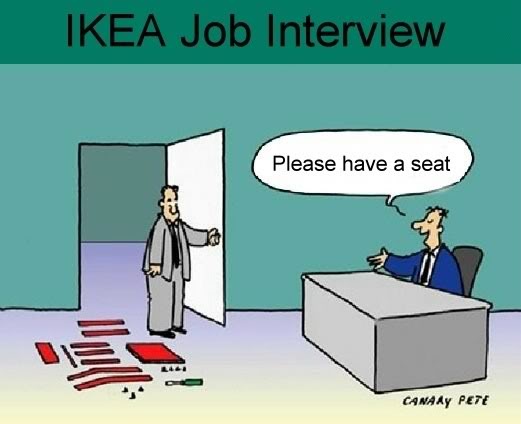
When I first arrived at the managerial level in my career, I started to do a lot of entry-level interviewing for my firm.  Some of that involved going to colleges and business schools where we would interview 8-10 candidates back-to-back.  It became a taxing chore, trying to stay attentive to each person as the day wore on.  The faces, resumes, and responses all started to blend together.

I had the good fortune to team up on one of these campus trips with a wiser, more experienced colleague. Rishad Tobaccowala is now one of the most respected global voices in the advertising industry, but then he was just a very insightful guy who gave some terrific advice. His suggestion was simple. Put aside the standard questions, and instead just try to learn something useful from each person you meet.

That simple tip almost immediately elevated the experience on both sides of the table. It made me a better interviewer, and it made each interview a more substantial conversation. If you really focus on learning something new from a person, it has the following effects:

It makes you ask better questions

Instead of leaning on old hacks like “tell me about yourself” or “share an example of where you overcame a significant obstacle,” it makes you want to uncover what is special in their experiences and background.  It creates a game-like dynamic that motivates you to search for clues about what makes this person unique.

It’s more revealing

We tend to reveal our truer selves when we talk about something that’s a real passion for us. It shows what’s important to us, how we think, how we pursue goals. By bringing out something the other person feels drawn to, you get a clearer sense of who they are. As a result, you get a better gauge of what that person could or couldn’t bring to the role you’re hiring for.

It increases the value of the conversation

The traditional interview creates a filtering mentality. The time is only worthwhile if the candidate passes muster. By transforming it into a learning opportunity, it creates a reward even if the person isn’t a fit for what you’re looking for. It brings a benefit to the conversation itself, not just to the chance of a hiring outcome at the end. Practically speaking, it also opens the potential for seeing a different fit down the road.

Interviews are a problematic evaluation tool for a number of reasons. But I found this advice makes them more effective for what interviews do best, which is providing the opportunity to get a fuller sense of a person beyond their acquired skills and experiences.

Leave a comment

Filed under Agency Management, Business Management

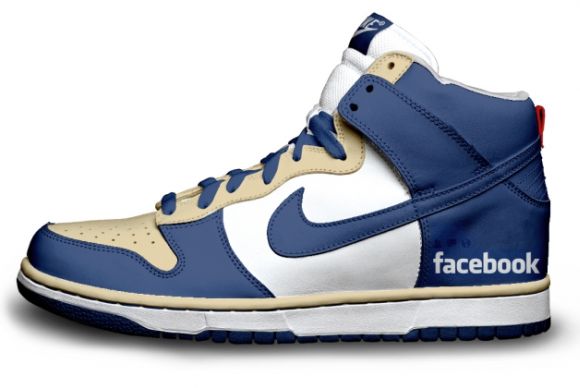
Is Facebook the Nike of Social Media?

All the discussions about Facebook’s IPO center on how a company that already dominates the social mediasphere can continue to dramatically grow even more in the future.  The valuation it’s seeking is justified if you believe that what Facebook is now represents a fraction of what it will become.

There is an interesting parallel here to the US athletic shoe industry of a few decades ago. Historically, that industry had a rotating position at #1.  Leadership was determined by external trends largely outside of the control of the companies.  As changes in tastes, fashion, and fitness changed, so did companies’ fortunes.  When basketball shoes were only for basketball players, Converse dominated. When they became a fashion statement, Converse faded. When running was the fitness movement sweeping the nation, Nike came to the fore.  When running gave way to aerobics, Reebok was born. Because of that, up until the 1980’s, no company that lost the #1 position ever regained it. In this way, the industry was similar to the social media world. As Friendster gave way to MySpace, which gave way to Facebook, no company ever regained its position after the crowd had moved on to the next thing. They were each the beneficiary and the victim of changing tastes and trends.

In 1983, Nike slipped. They missed some trends, had overextended their product lines, and dropped from the leadership position. Phil Knight came back as CEO and pivoted the company. Over the course of a year and a half, they changed the leadership team, cut costs, streamlined existing products, established new ones, and changed their marketing strategy. Progress was erratic, but by the 1990’s, they had regained the lead spot. For the first time, a company had strategically engineered a return to leadership in that category.

So the question is whether Facebook is a Nike. Can they engineer success in a way that defies the way the industry has behaved until now?

Leave a comment

Filed under Innovation, Market Strategy

The Four Tenets of A Digital Mindset

The Digital New Fronts showed another maturing stage in the development of online content. It demonstrated the continued blurring of the offline and online worlds. Television series and web series are increasingly utilizing the same talent, pursuing the same audience, and selling to the same advertisers. This blurring will continue as advances in addressable television, tablets, and over-the-top video make the distinction between digital and broadcast content disappear.

This represents both a victory and a conundrum for proponents of digital marketing. The victory rests in the growing importance of social, mobile, and online marketing in the plans of even the most traditional marketers. Several global brands are being built almost entirely on digital marketing strategies.  So, as far as rising to the ranks of market importance, digital has “won.”  But the conundrum is rooted in this same success for digital practitioners of every stripe.  When everything and everyone is using digital, is there any meaningful distinction left in being a digital marketer?

Digital marketers used to distinguish themselves based on their mastery of channels that most other people didn’t understand. They knew how to design websites, build rich media banners, and bid on search terms. That knowledge is both more widespread and easier to tap into than ever before.  That said, there is still something quite valuable about true digital marketing. It’s not about the toolset; it’s about the mindset. What is still lacking for many marketers and agencies is the mindset that comes from a digital way of looking at that world.  There are four core tenets underlying the digital mindset:

Everything is Connected

The digital imperative is to constantly seek new points of connection. In marketing, digital brands find new ways to connect across multiple levels.  Those connections can be made across time, people, information, and interests.  In that way, it can connect brand building with sales, existing customers with potential customers, R&D with Customer Service, etc. Where traditional marketing tends to separate into channels, digital marketing is always finding new ways to link together.

Actions Trump Impressions

Traditional marketers often measure the effectiveness of their efforts by the impressions they generate. Even experiential efforts like live events are reported in terms of how many equivalent impressions they generated. The digital mindset sees value in actions. An action is a measure of commitment, while an impression is only a measure of exposure.  If you’re looking to make a friend, interacting with someone will get far better results than being seen by someone. Similarly, if you can get someone to post something, share something, or like something then you are far more likely to sell something, either to that person or someone they know.  In that view, getting a thousand people to do something is more valuable than getting a million people to see something.

Always Optimizing

The traditional marketing cycle is like a movie release. The marketers spend months developing a new story, work behind the scenes to perfect the details, and after several months, launch it to the world in a glorious finale. If it succeeds, you make a sequel; it if fails you start over with a new one. The digital mindset embraces the beta view of software development. The launch is seen as more a beginning than an end. By gathering feedback and measuring reactions, the first release gets tweaked and upgraded.  In the digital view, a release does not have the rigidity of a final cut, but the malleability of software code.

Data is Currency

All of these elements are driven by data. To be digital, you need to be know how to harvest, process, and analyze data.  And it’s not just for performance metrics. Performance measurement is vital, but data provides much more than that. Digital marketers are excited by data because it reveals new connections, shows what people are really doing, and points the way to building deeper relationships. The digital mindset not only recognizes the awesome business potential of data, but the amazing creative potential of data as well.

Having the latest digital tools doesn’t make you a digital marketer anymore than owning a chessboard makes you a chess player.  For both qualifications, the proof is in how you play the game.

Leave a comment

Filed under 21st Century Marketing, Digital Marketing, Innovation